
Battery Water: Why Is It Important for Your Inverter Battery?
An inverter battery is an important part of every home and office. It provides backup power during electricity cuts and helps keep essential appliances running. But to keep your inverter battery working properly, regular maintenance is important. One of the most important parts of battery maintenance is checking the battery water level.
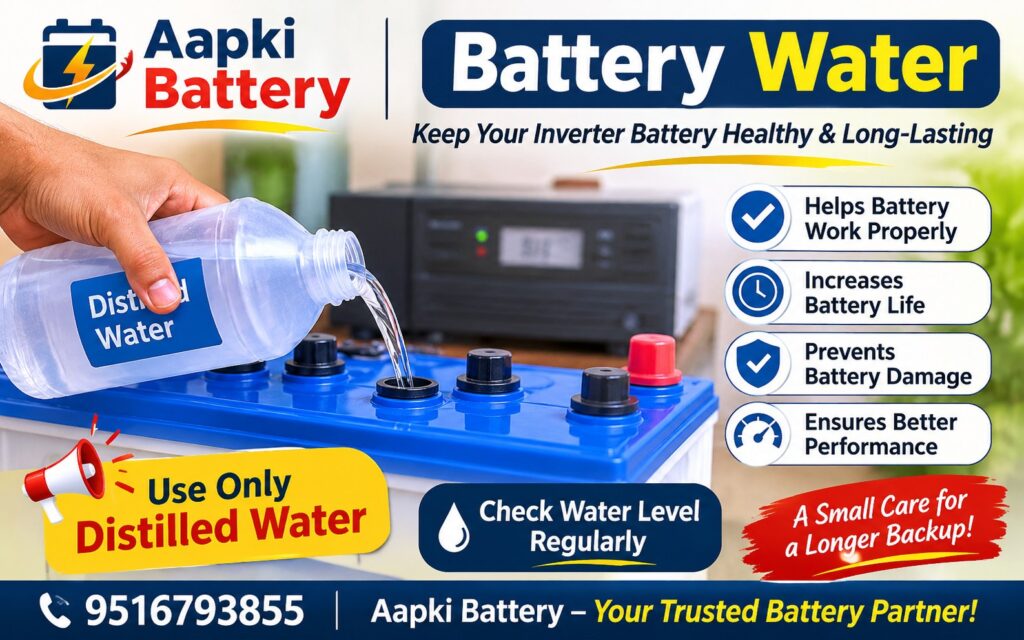
What Is Battery Water?
Battery water is specially purified water used in lead-acid inverter batteries. It is also commonly called distilled water or demineralized water. During battery charging and discharging, water inside the battery gradually decreases due to evaporation and electrolysis. Therefore, it is important to check the water level regularly and refill it when required.
Why Is Battery Water Important?
Battery water plays an important role in the performance and life of an inverter battery.
1. Helps Battery Work Properly
Battery water helps maintain the electrolyte level inside the battery, allowing it to work properly.
2. Improves Battery Life
Maintaining the correct water level helps prevent damage to the battery plates and supports longer battery life.
3. Prevents Battery Damage
Low water levels can expose the battery plates to air, which may cause permanent damage.
4. Supports Better Performance
Proper battery maintenance helps the battery deliver reliable backup performance.
Which Water Is Best for an Inverter Battery?
Always use distilled water or Battery-grade demineralized water for lead-acid inverter batteries.
Never use:
Normal tap water.
Drinking water.
RO water.
Mineral water.
Rainwater.
These types of water may contain minerals and impurities that can damage the battery.
When Should You Refill Battery Water?
You should check the battery water level regularly.
Check the water level approximately once a month.
During hot weather or heavy battery usage, check more frequently.
Refill when the level reaches the minimum mark.
Maintain the water level between the minimum and maximum marks.